To find the right editor or site owner for outreach ethically, start with what the site publishes itself: contact pages, author bios, “write for us” guidelines, editorial staff pages and the author’s public professional profiles. Then use reputable email-finding tools to confirm a work address, contact one relevant person per pitch, explain why you are reaching out, and respect privacy rules and opt-out requests.
Key Takeaways
- The best contact is the person responsible for the section or topic you are pitching, not a generic inbox.
- Public sources on the site itself are the most reliable and appropriate place to start.
- Use email-finding tools to verify, not to scrape personal data at scale.
- Contact work addresses for work purposes, and make opting out easy.
- Data protection rules such as GDPR and anti-spam laws apply to outreach, so keep a lawful, respectful process.
Why the Right Contact Matters
Sending a great pitch to the wrong person is one of the most common reasons outreach fails. A guest post pitch sent to a general support inbox, or a PR story sent to a sports reporter, rarely gets a reply. Finding the person who actually decides what gets published on a topic can do more for your reply rate than any template tweak.
It also protects your reputation. Editors talk to each other, and outreach that feels intrusive or careless damages relationships across a niche.
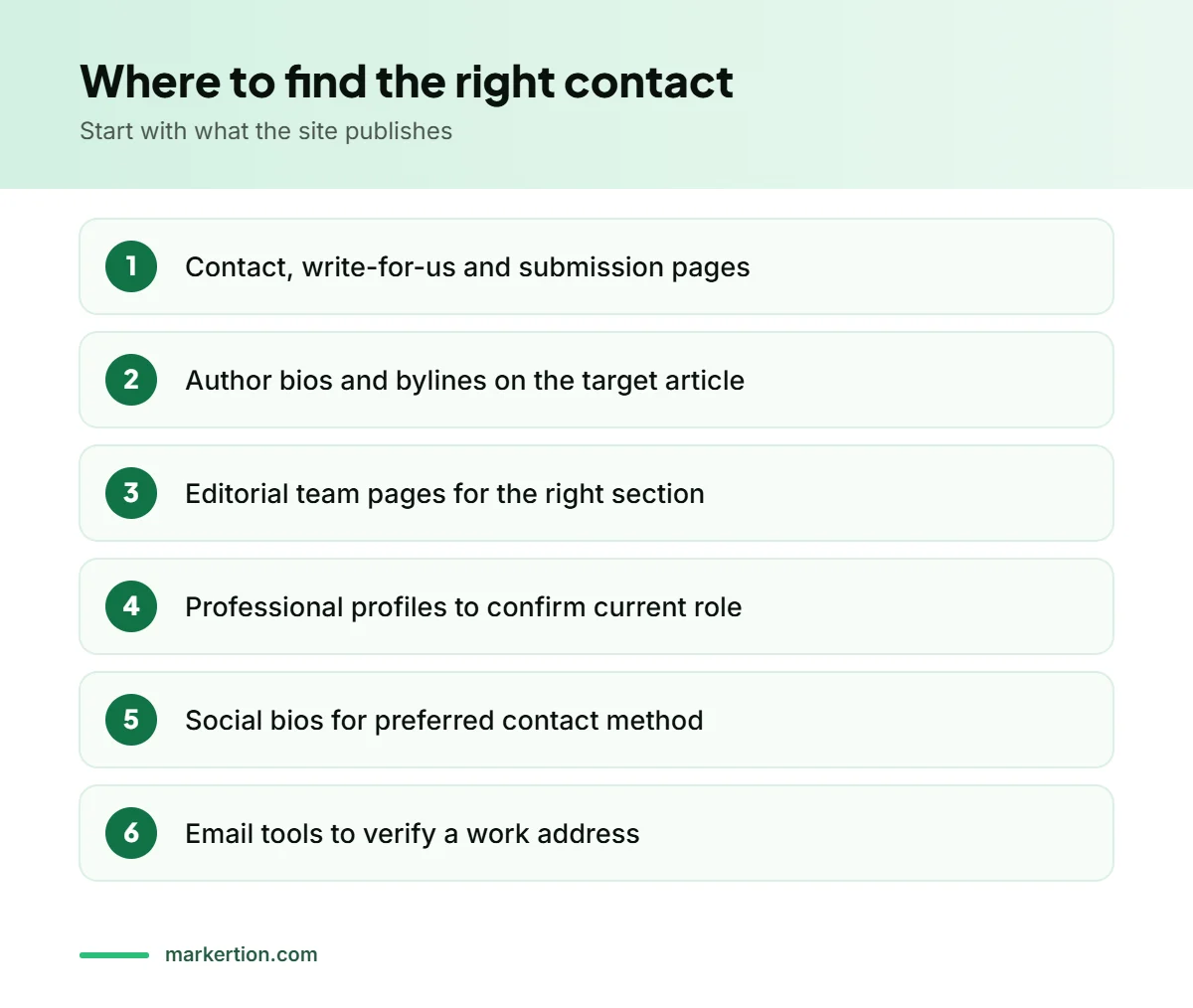
Where to Find the Right Person
1. The site’s own contact and guidelines pages
Start with “contact”, “write for us”, “contribute”, “submissions” and “advertise” pages. Many sites state exactly who handles contributor pitches and how to reach them. Follow those instructions first; they are the publisher’s preferred route.
2. Author bios and bylines
For niche edits (link insertion) or updates to a specific article, the author of that article is often the best contact. Look for author bio boxes, author archive pages and links to their professional profiles.
3. Editorial team pages
Larger publications list editors by section. Pick the editor responsible for your topic rather than the editor-in-chief.
4. Professional networking profiles
Public professional profiles can confirm someone’s current role at the publication. Check that they still work there before pitching, since roles change often.
5. Social profiles
Many journalists and bloggers list their beat and preferred contact method in their public bio. Some say they prefer pitches by email; others say they do not accept cold pitches at all. Respect what they say.
6. Email-finding and verification tools
Tools such as Hunter, Snov.io or similar services can suggest a work address based on a company’s email format and verify whether it is deliverable. Use them to confirm a contact you have already identified, not to harvest every address at a domain.
A Simple Contact-Finding Workflow
- Identify the role you need: section editor, article author, site owner or content manager.
- Check the site’s own pages for guidelines and named contacts.
- Confirm the person’s current role on their bio or professional profile.
- Find or verify a work email with a reputable tool.
- Record the source of the contact in your outreach sheet.
- Send one personalised pitch with a clear reason for contacting them.
Ethical and Legal Basics
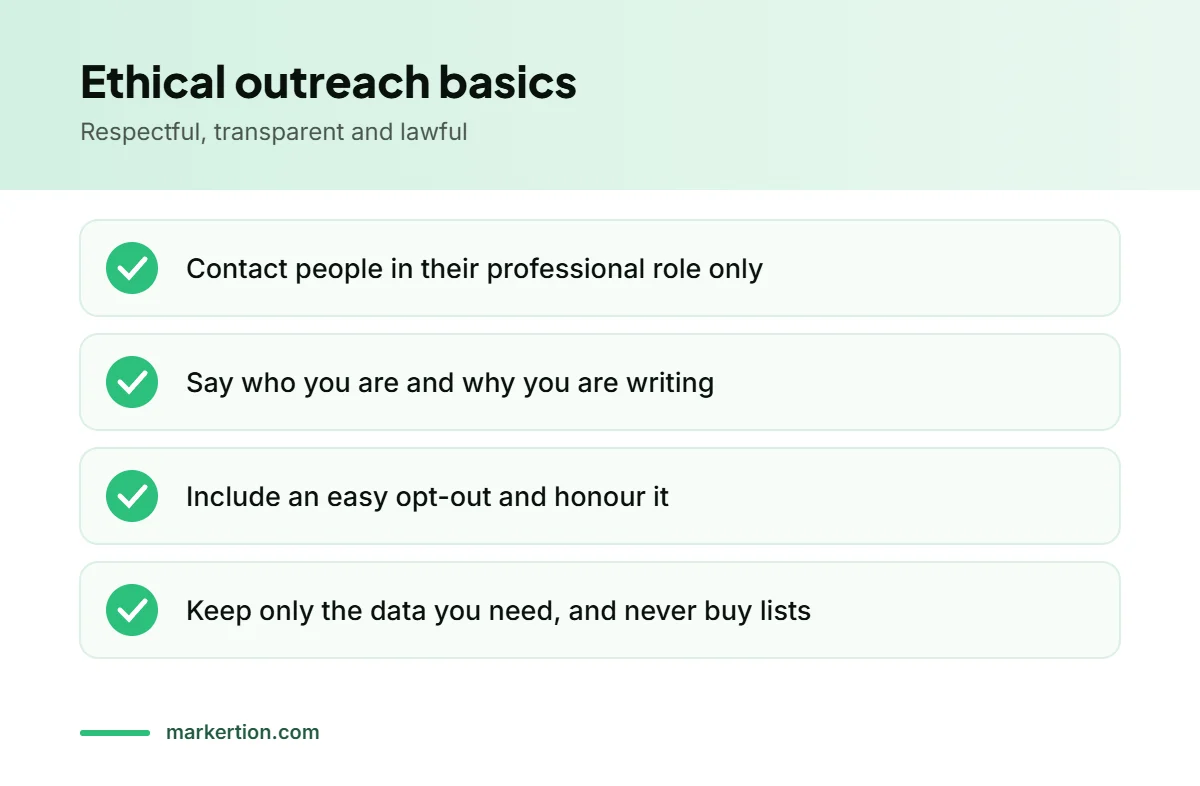
Outreach involves personal data, so treat it carefully. This is not legal advice, but the basics most teams follow are:
- Contact people in their professional role about topics relevant to their work.
- Be transparent: say who you are, which company you represent and why you are writing.
- Include a simple way to opt out, and honour it promptly.
- Keep only the data you need, such as name, role, site and work email, and do not keep it longer than necessary.
- Know the rules where you operate and where recipients are. Data protection laws such as GDPR in the UK and EU, and anti-spam laws such as CAN-SPAM in the US, set requirements for commercial email.
- Never buy random email lists or scrape personal addresses at scale.
If you are unsure what applies to your business, speak to a qualified legal adviser.
Contacts to Avoid
| Avoid | Why | Better option |
|---|---|---|
| Generic support inboxes | They rarely reach editorial staff | Section editor or contributor address |
| Personal email addresses | Inappropriate for work pitches | Verified work address |
| Several people at once on the same site | Feels like spam and annoys teams | One relevant person per pitch |
| People who say they do not accept pitches | Ignores their stated wishes | Follow their preferred route or skip |
| Old contacts from previous roles | They may have moved on | Re-check current role |
Making the First Contact Count
Once you have the right person, the pitch still has to earn a reply:
- Reference a specific article they wrote or edited.
- Explain your idea in one sentence and why it suits their readers.
- Keep it short and easy to say yes or no to.
- Follow up once or twice at most. Our outreach follow-up sequence explains timing.
For pitch structures that work, see our guest posting outreach email templates.
Keeping Your Contact Data Clean
- Record the date and source for each contact.
- Mark bounces and remove them quickly.
- Keep a suppression list of people who opted out.
- Re-verify contacts older than a few months before reusing them.
- Note each editor’s preferences, such as topics and pitch format.
Clean data keeps deliverability high and stops you from repeating mistakes with the same people.
Building Relationships Instead of One-Off Contacts
The most valuable outreach contacts are the ones you keep. An editor who accepts one good article is often happy to hear from you again, as long as every pitch is relevant and every piece you deliver is strong. Simple habits help:
- Thank editors after an article goes live and share it with your audience.
- Send a short note when you have data or a quote that fits a story they are working on, even if it does not include a link.
- Keep track of their topics and publishing calendar so future pitches fit.
- Never send them low-quality content, even when you are busy.
Over time a small group of trusted editors can deliver more placements than thousands of cold emails, with far less effort and much less risk to your sender reputation.
Frequently Asked Questions
How do I find an editor’s email for outreach?
Start with the site’s contact, guidelines and team pages and the author’s bio. Confirm their current role, then use a reputable email-finding tool to verify their work address.
Is it legal to send cold outreach emails?
In many places it can be, if you follow the relevant rules, such as being transparent, contacting people about their professional role, offering an opt-out and handling data lawfully. Rules differ by country, so check what applies to you.
Should I email several people at the same publication?
Generally no. Pitch the one person most relevant to your topic. Contacting several people at once usually annoys the team and lowers your chances.
What if I cannot find a contact?
Use the site’s official contact form or submission page. If there is no route for pitches, the site may not accept them, and it is better to move on.
Does Markertion handle outreach for clients?
Yes. Our outreach team researches the right contacts, personalises every pitch and follows clean data practices as part of our guest posting services.
Final Thoughts
Good outreach starts with reaching the right person in the right way. Use the publisher’s own pages first, confirm current roles, verify work addresses with reputable tools, pitch one relevant person at a time and respect privacy and opt-outs. It takes a little longer than blasting a list, but it earns more replies and protects the relationships your link building depends on.
About the author: Shahidul Afridi is the founder of Markertion, a digital PR and link building agency that has built 6,000+ links for 260+ client partners since 2021. He writes from hands-on campaign work, not theory.

Digital PR & Link Building Expert